
A visit from Delaware County Probate Judge David Hejmanowski shows how thoughtful planning can spare families unnecessary delay and expense.
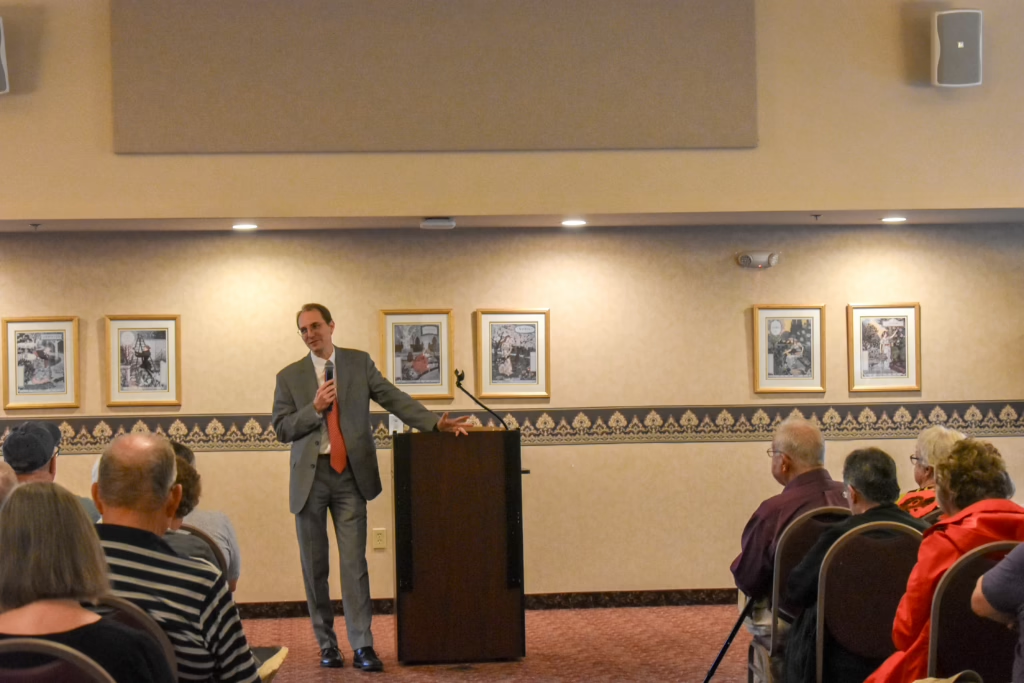
When Delaware County Probate Judge David Hejmanowski spoke at Willow Brook Village on August 20, he brought decades of firsthand experience helping families navigate what happens after a loved one dies. Some families move through the process with relative ease. Others face months of delay and unexpected costs that thoughtful planning might have alleviated.
Judge Hejmanowski has presided over the Delaware County Probate Court since 2015. He has seen the difficulties families can face when a loved one leaves no estate plan. His message to the Willow Brook audience was clear: the time to plan is now, while you can make and communicate your own decisions.
“If we can encourage people to do simple, relatively inexpensive planning during their lifetime,” he said, “they will make the task supremely easier for their loved ones after they are gone.”
This post draws on the resources Judge Hejmanowski shared at Willow Brook to help you get started.

Probate is the legal process through which a court validates a will, appoints an estate representative, and oversees the distribution of probate assets. It serves an important purpose, but it can take time and involve court costs and attorney fees. During the process, some property and accounts may not be readily available to family members.
Many assets can pass outside probate by taking simple, low-cost steps. The right tools depend on the asset and your individual circumstances.
Before you can plan, your family needs to know what you have and where to find it. Judge Hejmanowski’s office distributes a Personal Records and Important Documents checklist that covers 25 categories: family contacts, physicians and trusted advisors, your will, funeral arrangements, birth and marriage certificates, military records, bank accounts, retirement accounts, investments, insurance policies, real estate deeds, vehicle titles, and digital accounts and passwords.
Completing this checklist, storing it safely, and telling a trusted person where to find it is one of the most practical gifts you can give your family. Download the checklist from the Delaware County Probate Court website at probate.co.delaware.oh.us, or call the court at 740-833-2680.
Judge Hejmanowski helped create the Delaware County Good Deeds Program in 2018, working alongside County Recorder Melissa Jordan and Clerk of Courts Natalie Fravel. The program gives Delaware County residents practical, low- or no-cost strategies for keeping certain assets out of probate. Here is what it covers:
For jointly owned real estate, review the deed to determine whether it includes survivorship language. When it does, the deceased owner’s interest may pass to the surviving owner outside probate. Without appropriate survivorship or transfer-on-death planning, the deceased owner’s interest may become a probate asset.
Property owners may also use a Transfer on Death Designation Affidavit to name a beneficiary who will receive the property after the owner’s death without the property passing through probate.
Contact the Recorder’s Office to learn more: Melissa Jordan, Recorder, 145 N. Union St., 1st Floor, Delaware, OH 43015 | 740-833-2460 | recorder@co.delaware.oh.us.
Important note: Consult an attorney before executing a survivorship deed or Transfer on Death Designation Affidavit. Recording a transfer-on-death affidavit does not give the beneficiary a present ownership interest. Adding a co-owner to a deed does, and it may expose the property to that person’s creditors.

For many titled vehicles and watercraft, a Transfer on Death (TOD) or With Rights of Survivorship (WROS) designation can keep the asset out of probate. Ohio also provides a separate transfer process for certain vehicles owned by a deceased spouse. Current requirements are available from the Ohio Bureau of Motor Vehicles and the Clerk of Courts Title Division.
A TOD designation names a beneficiary who receives the titled asset after the owner’s death. A WROS designation allows a deceased co-owner’s interest to pass to the surviving owner. Ask the Title Division which option applies to your situation.
Delaware County residents can contact the Delaware County Clerk of Courts Title Division: Natalie Fravel, Clerk | Delaware Title Office: 2079 US Hwy 23 N., Delaware, OH 43015 | 740-833-2490 | Lewis Center Title Office: 8647 Columbus Pike, Lewis Center, OH 43035 | 740-657-3945.
Retirement accounts, IRAs, 401(k) plans, 403(b) plans, life insurance policies, annuities, and many investment accounts allow you to name beneficiaries directly. Assets with valid beneficiary designations generally pass outside probate. Two cautions from the Good Deeds materials bear repeating:
Bank accounts can carry Payable on Death (POD) beneficiaries, often at no cost. Ask your bank what information it requires to add the designation. A POD beneficiary has no access to the account while you are alive. After your death, the bank transfers the funds when the beneficiary completes the required process.
Joint accounts are different. Adding a co-owner may give that person immediate access to the funds while you are alive. Understand the account terms and the legal consequences before adding anyone.
Even with all of the above in place, a will remains important. It covers assets that do not pass by another method and, for parents of minor children, can nominate a guardian. You may deposit your will with the Delaware County Probate Court for safekeeping. The court currently charges $35. Store a copy in a fireproof location and make sure a trusted person knows where to find it.
The Delaware County Recorder’s Office offers a free AlertMe notification service. It emails subscribers when a document containing their registered name is recorded. The service cannot prevent fraud, but it can help property owners spot a potentially fraudulent filing quickly. Learn more at recorder.co.delaware.oh.us/resources/property-fraud/.
Estate planning can impact your senior living plans. For example, assets transferred to an irrevocable trust may no longer be readily available to the person who established the trust. That can affect financial evaluations for moving to a Life Plan Community. Because trust terms and community financial requirements differ, Willow Brook encourages prospective residents and their families to consult an estate planning attorney and a representative of the community they are considering before making decisions that could affect their move.
Planning ahead can help you understand how estate decisions may affect your senior living options. Willow Brook hosts educational programs such as Judge Hejmanowski’s presentation to help residents and families ask informed questions before making important decisions.
Delaware County Probate Court
Judge David A. Hejmanowski
145 N. Union St., 3rd Floor, Delaware, OH 43015
740-833-2680 | probate.co.delaware.oh.us
Email: probatefilings@co.delaware.oh.us
Delaware County Recorder’s Office
Melissa Jordan, Recorder
145 N. Union St., 1st Floor, Delaware, OH 43015
740-833-2460 | recorder.co.delaware.oh.us
Email: recorder@co.delaware.oh.us
Delaware County Clerk of Courts: Title Division
Natalie Fravel, Clerk
Delaware: 2079 US Hwy 23 N., Delaware, OH 43015 | 740-833-2490
Lewis Center: 8647 Columbus Pike, Lewis Center, OH 43035 | 740-657-3945
clerkofcourts.co.delaware.oh.us
Delaware County Bar Association
The bar association maintains an attorney directory that you can search by practice area, including estate planning, probate, and elder law.
This post draws on materials from Delaware County Probate Judge David A. Hejmanowski and the Delaware County Good Deeds Program. It is intended for educational purposes only and does not constitute legal or financial advice. Laws and procedures may change. Consult a qualified attorney before making estate planning decisions. Information and links were reviewed in October 2026.

Willow Brook Christian Communities
100 Delaware Crossing W.
Delaware, Ohio 43015
Phone: 740-721-3382


55 Lazelle Rd.
Columbus, Ohio 43235
Phone: 614-885-3300

100 Willow Brook Way S.
Delaware, Ohio 43015
Phone: 740-369-0048

100 Delaware Crossing W.
Delaware, Ohio 43015
Phone: 740-201-5640